normaldesign

design / art / architecture / research 


normaldesign is an interdisciplinary praxis working in the interstice between architecture and its related fields.


normaldesign focuses on the correlation of designed space with its aesthetic, social and idiomatic implications.


normaldesign is based in New York City with a wide range of projects in the US and overseas.

projects

selected projects (architecture)


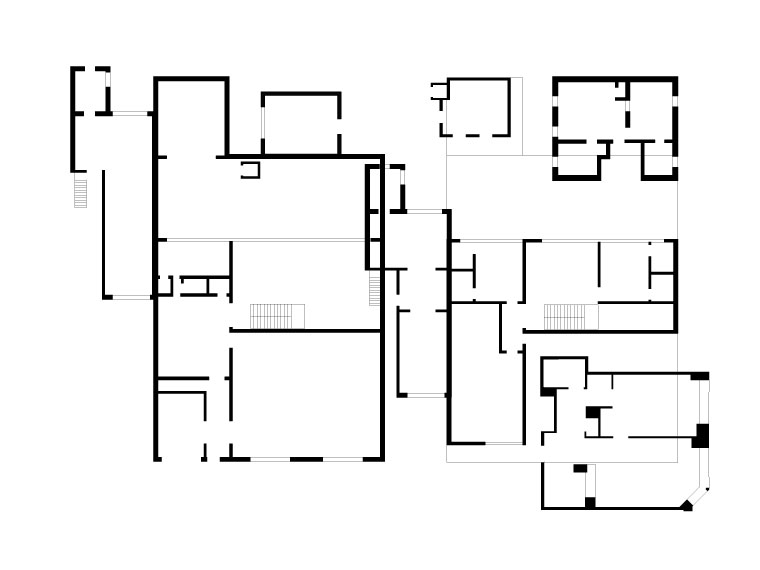
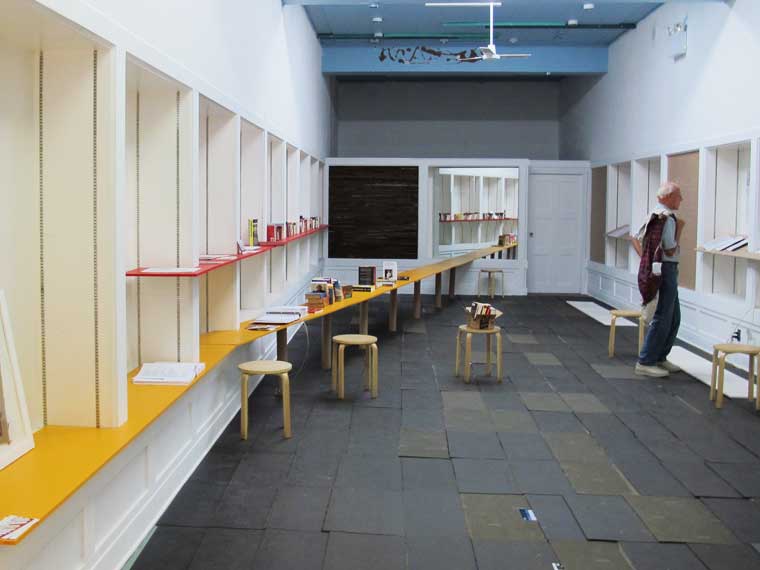
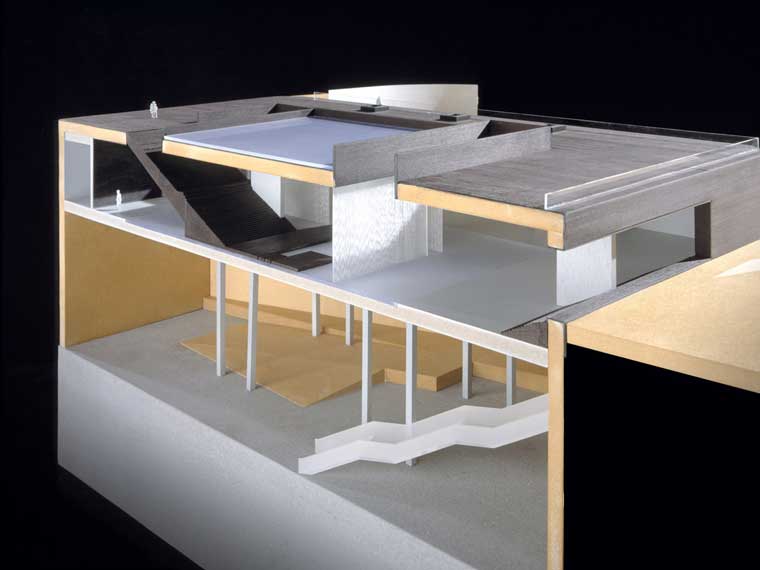
The expansion and relocation of a gallery in Chelsea, New York, offered the unique opportunity to realize a spatial concept that merges two office spaces, a photo agency, a gallery space and a conference room into a small setting that is functional in its varied spatial demands and sculptural in its built presence.

New York City, 2010

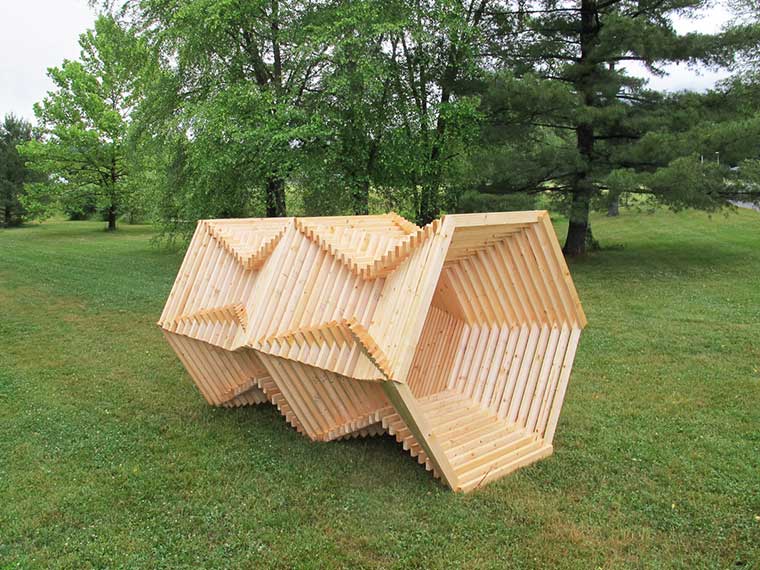
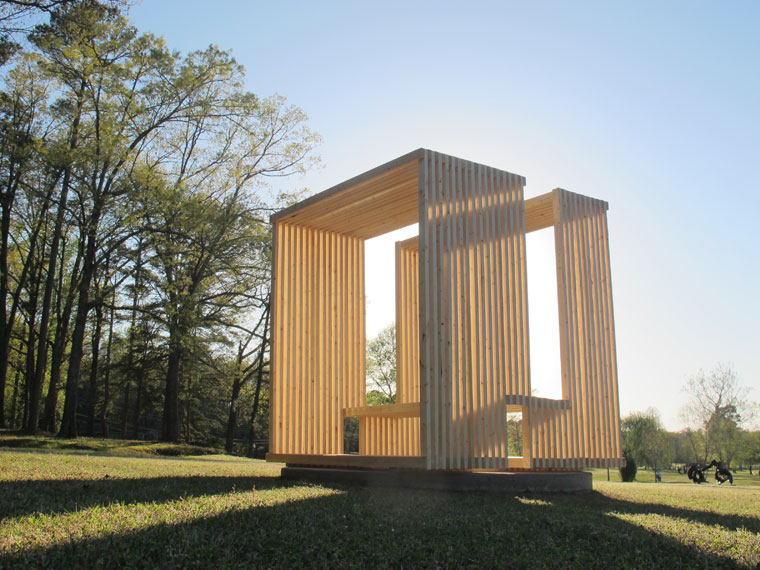
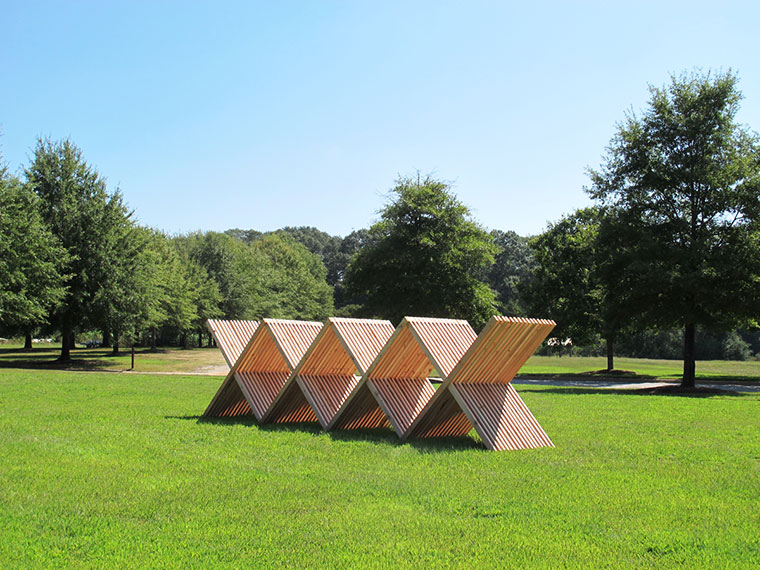
Much like the traditional Sukkah the project takes its departure from the appropriation of generic materials of the everyday, transforming them into a frugal structure for temporary enjoyment and celebration. Sheets of plywood are assembled into two parallel walls, the structure is connected by two roof panels, and structurally supported by two cross-shaped columns that meet the minimum requirements to act as additional walls. The panels are perforated by cut-outs with a 3” to 16” diameter, the left-over pieces of which are being re-assembled to form the roof of the Sukkah. The generating and guiding concept is expressed in the project title as minus --> plus, i.e. an iteration of subtraction and re-adding in order to arrive at a structure that is not wasteful in its material economy, with an added value in architectural expression. A curtain serves as a second layer to afford privacy and to emphasize an ephemeral festive presence. The distance of the solid space between the holes of the front and back panels of the roof are kept at less than 4 hand-breadths, interpreting the width of the construction element as the width of the solid material. The interior niches of the cross-shaped columns hold 48 cushions that can be spread out to cover the central area (8'x6') for night time use.

New York City, 2010

more on sukkah city

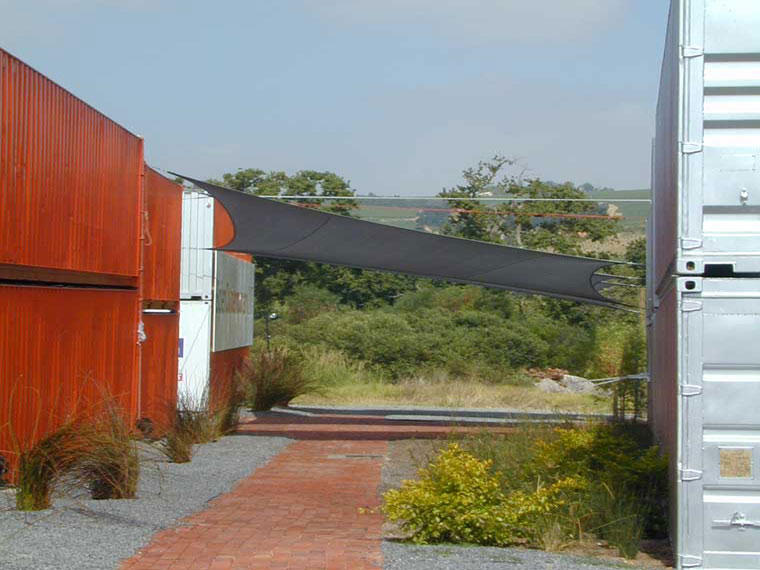
Subsequent to the winning the competition for the Southbank / Africa Centre (see below) we were commissioned to design a temporary building for the first Spier Biennial for Contemporary South African art to be held on site of the future development. With an extremely tight budget and a planning and construction schedule of only 6 months the building’s main structure was constructed out of approximately 100 shipping containers and a tensile roof enclosure. A main concern was the sequencing of the spatial experience, and how to virtually have an existing unsightly building disappear, which remained on site: three galleries were placed around the existing house, with an oblong outdoor gallery connecting exit and entrance, the center remained vacant.
The temporary structure remained on site for 4 months and provided a spatial framework for a vibrant experimental exhibition of contemporary art.

Stellenbosch near Cape Town, South Africa, 2007/08

in collaboration with thread collective

Global Studio, a collaborative initiative of the University of Sydney, Columbia University and the University of Rome La Sapienza, and other academic institutions, had its third annual studio in Johannesburg during the summer of 2007 with international students of architecture and related studies from all over the world. I was invited to participate as studio mentor. On the southern periphery of one of the oldest and most central townships of Johannesburg, Alexandra township, the city had planned a slum clearing project in order to construct an olympic-sized skating arena. Deemed highly insensitive, both by the local as well as the planning community, we were asked to develop a spatial framework alternative that allowed for a bottom-up development of the informal settlement area.

Alexandra Township, Johannesburg, South Africa, 2007

in collaboration with Global Studio and Peter Rich Architects

winning competition entry

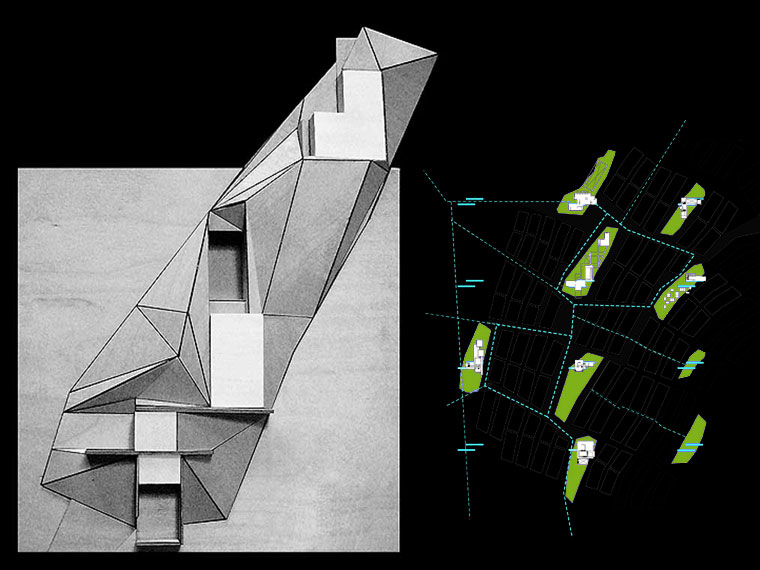
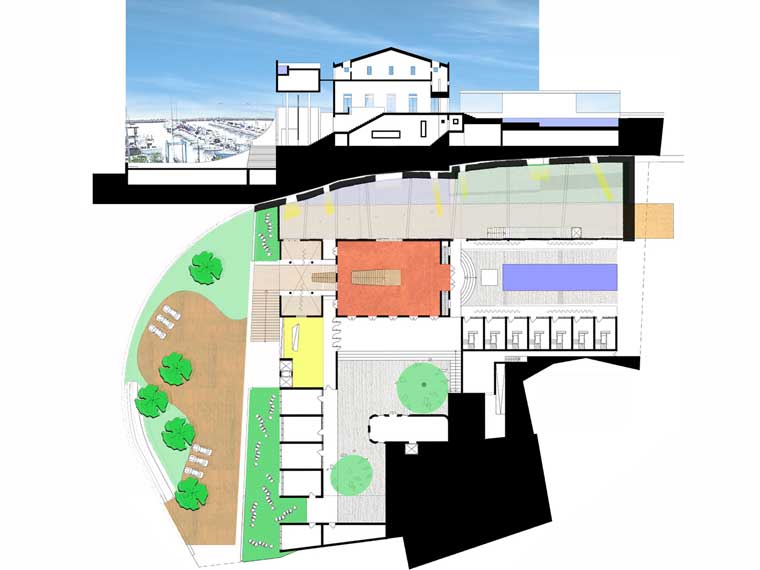
The Africa Center, a non-for-profit institution based in South Africa to promote and support the production, research and dissemination of contemporary African art, envisioned to create a major center for contemporary art in conjunction with Spier Holding, a private company based just outside Cape Town, South Africa. An international open 2 phase competition was launched in which our project was chosen as winning entry. The Africa Center will include 8 cultural buildings for performances, display, research and creating of work. Along with the Africa Centre a residential fabric will be developed for approximately 1500 residents. The goals on artistic innovation, cultural significance, social responsibility and environmental sustainability were staked out by the clients with an exceptional commitment. The development strives to act as case study and role model for the fast changing society of South Africa in terms of social and ecological sustainability in the built environment. The master plan is being developed in collaboration with Arup’s sustainability unit and local partners. More on the competition can be read here

Stellenbosch, near Cape Town, South Africa, 2006/07 - ongoing

in collaboration with thread collective

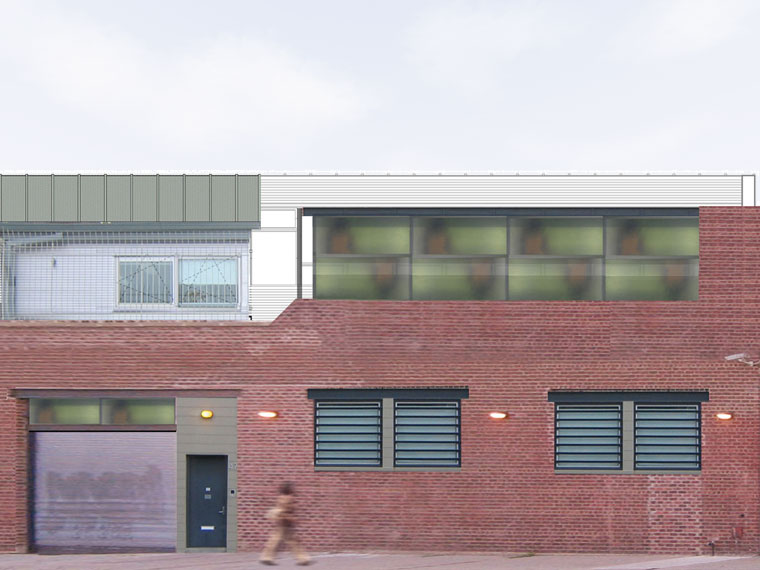
The project was conceived as an addition to an existing one-story brick building. The building was to be converted to two seperate artist studios with a joint middle floor for offices and common area. The diverse needs of the two artists - one a painter, the other a photographer - both in regards to space and day lighting is reflected in north facing shed skylights on the third floor and exagerated spatial dimmensions on the first floor. A light well penetrates the building in the center of the of the plot.

New York City, 2007

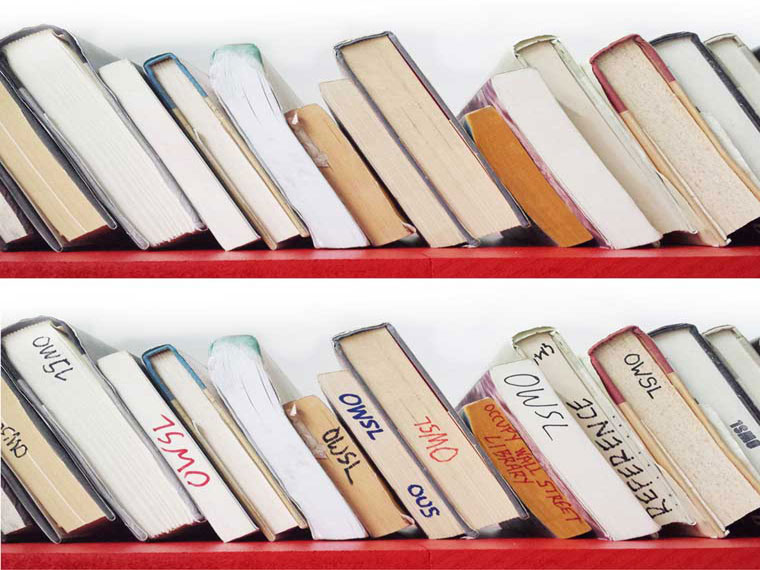
Following the opening of his Paris store and his subsequent store in LA, Benedikt Taschen commissioned Phillipe Starck to design his third store in SoHo, New York. After the space was rented and the preliminary design was drawn up we were hired to act as NY liaison and on-site project managers / architects. Concurrent with the start of the project, the Austrian artist collective Gelitin staged a week-long performance/installation at Leo Koenig Gallery in Chelsea titled the tantamounter 24/7. The collective had locked themselves in a wooden enclosure for a full week while the gallery remained open 24/7 and the public was invited to insert objects into the contraption - the object along with a duplicate reemerged then on the other side after some time. A Phillipe Starck book by Taschen came in handy while visiting the gallery and the tantamounted book served as conceptual starting point for what essentially became a building project immersed in notions of transcontinental communication, translation and interpretation.

New York City, 2006

in collaboration with thread collective

The client, a successful artist had just finished renovating his bachelor loft in an old factory building in Brooklyn when circumstances changed and the all open space had to accommodate for family and two working art studios with employees. What started as a simple separation between his studio and living room took shape over the following 2 and a half years as a full renovation of the 6000 sf building, including custom furniture, adjustments to existing systems to increase efficiency, and a spatial reconfiguration to match the clients’ needs. The spaces were occupied during renovation and the studios were everyday work environments, which in turn required almost as much logistical planning as architectural design. The main stair, a steel and glass construction, was built out of a previous industrial stair, which was 100% recycled. Further consideration was given to material choices and their environmental foot print.

New York City, 2006

winning competition entry

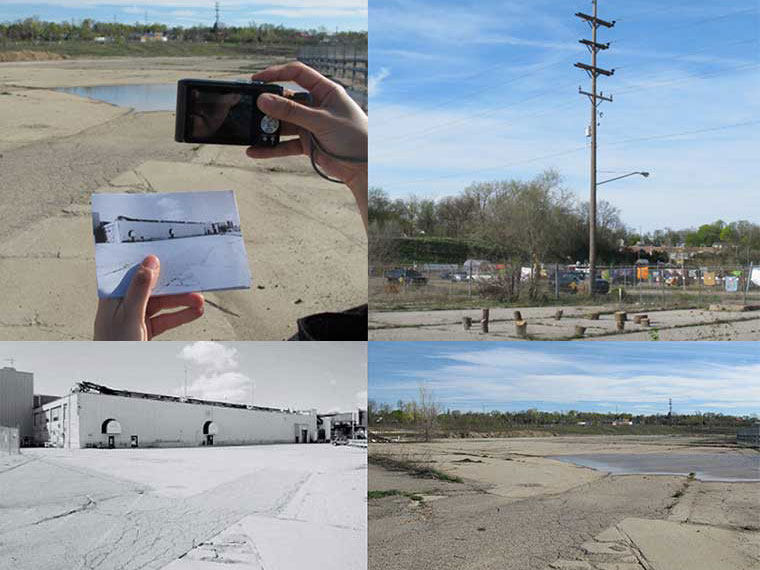
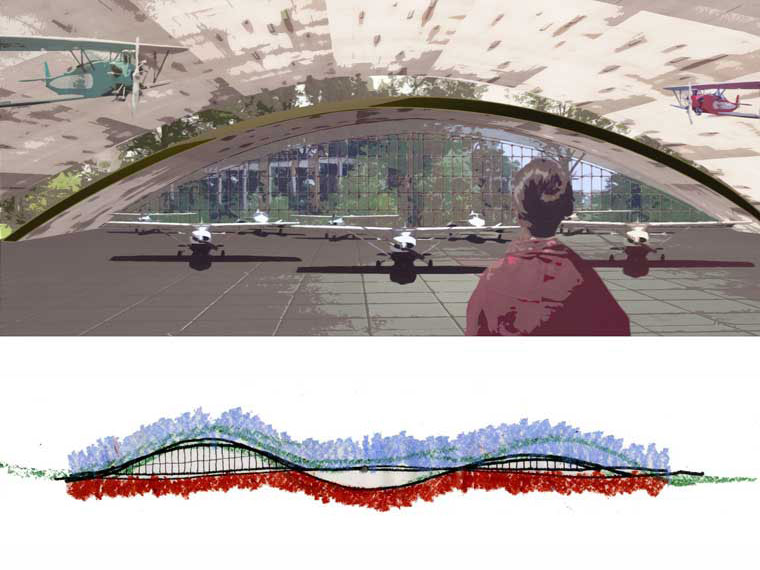
Krakow airport is one of the oldest airports in Europe and was a major aviation hub before World War II. Krakow’s Aviation Museum, which is located just outside the historic city on the original Krakow airfield, holds a major collection of early airplanes housed in dilapidated hangar buildings on site. Concurrent with the Architectural Biennial Krakow an invited ideas competition was launched to engage the site with a new exhibition building to ensure accessibility of the collection to the general public and to engage the land-marked site. The long and narrow site is traversed by an existing underground tramway which our proposal suggested to incorporate as primary entrance to the museum. The exhibition building(s) mimic both traditional hangar typology and landscaping morphologies, negotiating appropriate exhibition requirements with concerns to connect the outside spaces north and south of the new building. The southern part of the new building incorporates a site where a previous building was situated, ruins of which are land-marked and can still be seen.

Krakow, Poland, 2005

in collaboration with douglas romines

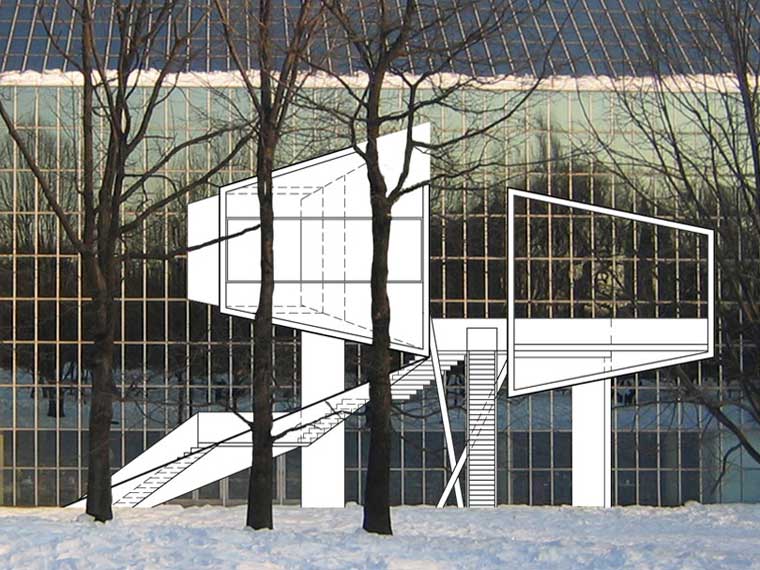
This self initiated project attempts to challenge the spatial disengagement of the Metropolitan Museum of Art with its surrounding towards Central Park. The large building complex of the museum almost ironically turns its back towards one of the most iconic American artifacts - Central Park. Not only is this surprising from an urban and spatial point of view, but the park itself should have its rightful place in the collection of the museum’s American wing next to artifacts by Sullivan, Wright etc. The proposed intervention pierces the curtain wall at the American Wing of the museum and interlocks two elevated pavilions - one accessible from the park, one from the museum - allowing for visual and spatial interaction. The formal approach mitigates between sculpture, building and the park morphology.

New York City, 2005

Prior to opening the Taschen Book Store in SoHo the raw construction site was used to open a temporary pop-up store to capture the holiday season and to announce the future store.

New York City, 2005

finalist competition entry

Less than 2 years after the tragic attack on the World Trade Center an international competition was launched for the design of a memorial on site of the former World Trade Center. Our proposal Lower Waters was selected as one of eight finalists out of 5201 international entries.
Lower Waters proposed a tilted urban park that descended from street level on the southern periphery of the site to 30’ below street level towards the northern edge of the former WTC.
"[...] The north tower becomes a shadowy, black granite block that rises from the bottom of the incline to street level; the south tower is an open box clad in white stone, which sinks from the sidewalk to the floor of the tub 30 feet below. [...] Campbell and Neumann are the only ones to have adequately faced the problem of how to negotiate the passage from street grade to the depths or to have thought about how an office worker on a lunch break might experience the memorial park.“

JUSTIN DAVIDSON, Newsday 11/20/2003

New York City, 2003/04

in collaboration with Bradley Campbell

new york times
newsday
lmdc

winning competition entry

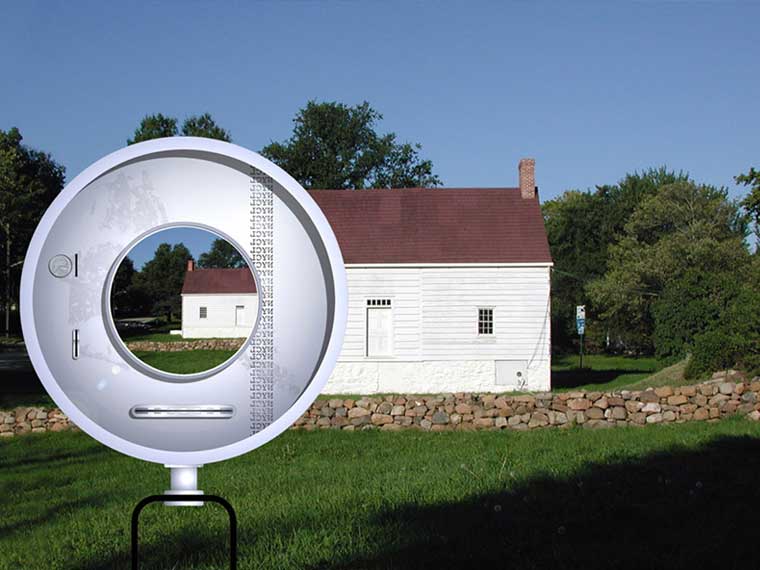
Place Matters, a joint initiative by the Municipal Art Society and City Lore, New York, asked by means of a competition how the traditional marker of historic sites might be rethought and redesigned to applied to approximately 400 sites of historic importance throughout New York City. Our design for the NYCL_machine, a stainless steel postcard dispenser with time stamp and collector's info cards, was chosen as one of the winning entries. The project was exhibited to enter a public discourse on the infrastructure of memory in the urban landscape at Urban Center Gallery, New York.

New York City, 2002

in collaboration with Douglas Romines and Ann Neumann

exhibitions

selected exhibitions / performances / installations


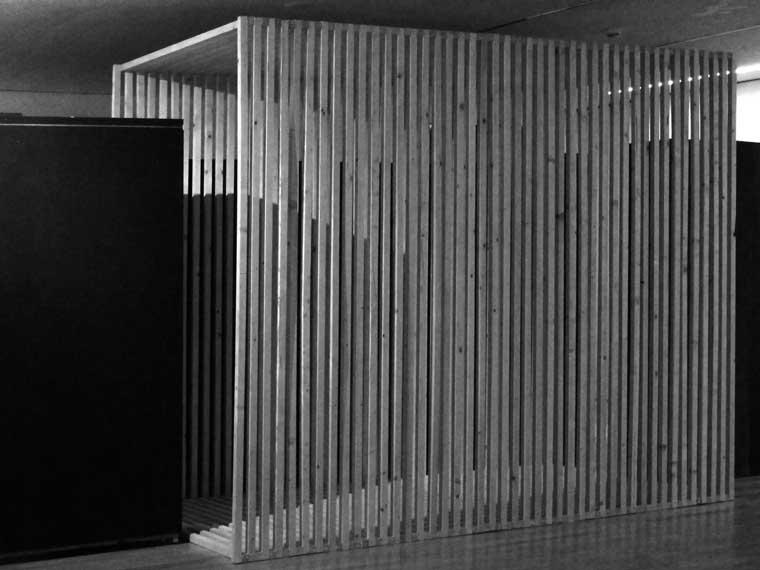
The Danish art collective wooloo initiated New Life Residency as their contribution to Manifesta 8, the European Biennial for Contemporary Art in Murcia, Spain. New Life Residency was conceived as first non-viual residency. Five international artists were invited to live and work for one week each in a completely blacked out large gallery space in Murcia and create work with the help of a blind local assistent.
My contribution Poesia Domestica explores notions of architectural design, production and perception in a non-visual environment.
(2010)
Exhibited as part of Manifesta 8 at
Centro Parragan, Murcia, Spain and at
Museo Regional de Arte Moderno, Cartagena, Spain
click here for an account of the project in the Swedish publication Riksutställningar
click here for the same in English

Pericardium is a multimedia piece, offering original choreography and musical score, interactive set design, and video projection. It interrogates the ambiguous consequences of building a wall: Protection vs. Isolation / Visible vs. Invisible / Unity vs. Separation / Support vs. Obstacle / Inside vs. Outside, etc. The piece questions the action of building such tangible device as means of protection in contemporary times, when globalism and media narrow and blur boundaries. It examines the Israeli/Jewish sub- consciousness of walls as a collective memoir of living inside a Ghetto; does building a defense wall bring some kind of a familiar comfort? Who does it really enclose, who does it protect? Have we gotten used to be Isolated?

Pericardium / Part 1 strips the political agenda and reveals personal human stories. It takes the audience on a unique but ubiquitous journey through 3 distinct sequences that interrogate mechanisms of inter-personal barriers as they are being constructed and de-constructed.

Premiere at Joyce SoHo, New York in May 2010

Pericardium / Part 2 will transcend the merely personal to a social level of human interaction. The work will take part of its inspiration from Henrik Ipsen's play "A Public Enemy".

forthcoming winter 2012

Pericardium / Part 3 will juxtapose inter-personal and social relationships with the abstraction of political mechanisms. While the parts are developed successively, the work may be considered to be merged into a single less linear and interwoven piece at a later date.

forthcoming 2013

Pericardium is a project by trialogue, a collaboration between choreographers and dancers Ella Ben-Aharon and Edo Ceder, video artist and photographer Adi Shniderman, and myself.
trialogue was conceived as an interdisciplinary collaboration in 2006 to investigate the confluence of architectural space, body space and virtual space. All collaborators maintain their own individual artistic trajectories with noted contributions in the fields of dance, visual arts and architecture. Our collaborative exploration, however, maintains an ongoing dialog and platform for cross-disciplinary work.

882 3rd Ave., 10th floor (rear) was developed during Diapason Gallery's Video Composition Workshop residency in the summer of 2010 which concerned itself primarily with questions of notation for live video compositions.
882 3rd Ave., 10th floor (rear) is a site-specific video composition in three movements. The performance was accompanied by a live music performance of John Cage's score 4'33”. The installation consists of a rotating projector and camera set-up. Live footage of the gallery was projected onto the surface of the surrounding gallery walls. Within each movement were consecutive distortions of color pitch, projection scale and imagery in relation to the gallery surface projected upon.
The compositional intent of the work is to foreground the relationship between projection and projected surface in a spatial environment. The intent is to evoke a visual “silence” equivalent to the musical notion of the same term in John Cage's work. As a video performance it is not the intent for the audience to close their eyes, but rather to frame sections of the surrounding space in a deliberate but generic way. The projected distortions will enhance the view on the rich but generic nature of the visual surrounding rather then suggest a picturesque projection frame. The performative aspect of the video performance and the accompanying musical score played live focused the attention of the audience and allowed a conscious appreciation rather then a backdrop environment.

The exhibition Architecturally.../ was conceived to investigate art and its relationship to the built environment. The exhibition concerned itself with the in-between, the collaborative and the transdisciplinary. With this intent in mind the exhibition project sets out to blur perceived disciplinary boundaries rather then to define them: the primacy of the disciplines were temporarily suspended for a more inclusive dialog on space and the site-specific. The artists and projects shown represent a wide range of disciplines including architecture, photography, painting, sculpture, video and dance. The curatorial selection was carefully avoiding to include art that merely commented on architecture, or architecture that wanted to be art. Instead, every project, in its own way, represents a transgression that allows to read the work on multiple terms.

The exhibition was conceived, curated and organized by
Matthias Neumann and Alois Kronschlaeger

Hendershot Gallery, New York
November 19, 2009 - January 30, 2010
with work by

Merav Ezer
Alois Kronschlaeger
Jason Varone
Bess Krietemeyer
D&E Tsachreli w/ Yoichiro Mizuno
trialogue
Graham Parker
Molly Dilworth
and Interboro

The podcast of the closing event panel discussion with Diana Balmori, William O'Brien Jr, David Ruy, Allan Wexler, and Alisha Wormsley, moderated by Michael Wang, can be listened to here

description
and more descrition etc.
description
and more descrition etc.
description
and more descrition etc.
description
and more descrition etc.

Following World War II, South Williamsburg in Brooklyn, New York, has become home to a community of Orthodox Hassidic Jews who have been engaged in radically re-working the notions of residential urban space to reflect the unique needs of their religious observances. The formal and visual manifestations of these typological characteristics are in the center of this ongoing study project. Over time the building activity in South Williamsburg changed its focus from mere adaptation of existing urban structures to reformulating typological needs in new construction, creating an urban morphology uniquely its own. This development raises questions in all aspects of urban architecture: from the reformulation of public spaces to the organization of the residential dwelling to phenomena of architectural expression. A study of the morphology and iconography of the built environment of South Williamsburg was undertaken in collaboration with photographer David Anderson, and exhibited at the Krakow Architecture Biennial as part of the exhibition series "Art & the City" in 2004.

William Shakespeare's
Much Ado About Nothing


performed at
Blue Heron Theater, NY
by Gallatin Theater Troupe
December 2004

directed by Andrea Stumpf

set design by normaldesign

contact


normaldesign, LLC

666 flushing avenue

brooklyn, new york 11206, usa

(+1) 646.244.9318

info[at]normaldesign.com